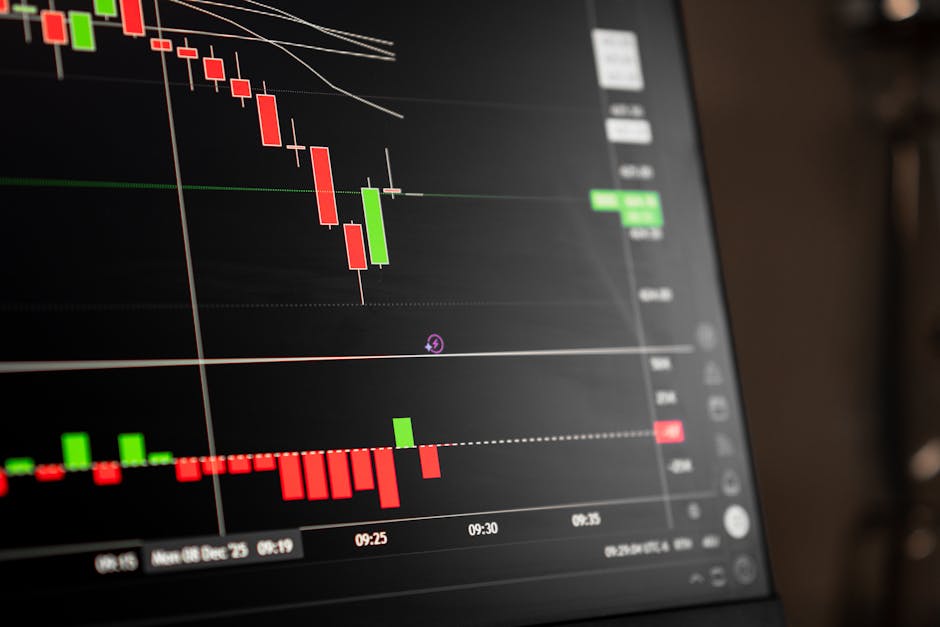
A number crosses the wire. Price jumps, then jumps the other way, then settles somewhere neither move predicted. If you clicked buy on that first candle, you probably paid the widest spread of the hour to enter a position the market immediately took the other side of. That is the whole problem with trading a news spike, and it is why learning how to trade a news spike without getting run over is less about prediction and more about understanding what happens to liquidity in those first few seconds.
This is a mechanics article, not a forecast. You will not find a prediction of what the next CPI print or rate decision does to gold or Bitcoin, because nobody knows and anyone who says they do is guessing. What you can know is how the plumbing behaves when a scheduled release hits, and how to keep that plumbing from grinding you up.
The first move is a liquidity vacuum, not a signal
Most of the time, a market has a healthy stack of resting orders above and below the current price. Buyers and sellers post their intentions, the spread stays tight, and your order fills close to where you clicked. That is a liquid market.
In the seconds around a high-impact release, that stack empties out. Market makers and algos pull their quotes because they do not want to be the fool holding a bad price when the number surprises. For a moment, there is very little sitting between where price is and where it could go. That is the liquidity vacuum. A relatively small order can shove price a long way because there is nothing to absorb it.
Three things happen at once inside that vacuum:
- Spreads widen. The gap between bid and ask can blow out to many times its normal size. You pay that gap on entry and again on exit.
- Slippage appears. Your market order, or a triggered stop, fills at the next available price, which may be far from your intended level because there are no resting orders nearby.
- False moves print. The first candle often stabs one direction, trips a cluster of stops, then reverses once real liquidity returns and the market digests the actual data.
None of that is a broker cheating you. It is what a thin order book does under stress. The mistake is treating the first candle as information. It is mostly noise from a market that has not finished pricing the news yet.
Why chasing the first candle is a losing habit
Picture the sequence. The release hits, price spikes up hard. Your instinct says the move is real, so you buy. But you are buying at the top of a widened spread, into thin liquidity, at the exact moment the fastest participants are already deciding whether to fade it. If the move was a stop-run, you are now long right as price reverses through the level you entered.
Even when you guess direction correctly, the spread tax and slippage eat into the edge. You entered late and expensive. The market rewards patience here in a way it rarely does elsewhere, because the cost of acting early is unusually high and the cost of waiting is unusually low.
There is a reason so many accounts get hurt around scheduled events. If you want the broader version of that story, why most traders lose money covers how avoidable behavior, not bad luck, does most of the damage. News chasing is one of the cleaner examples.
What to watch instead of the clock
The fix is not a magic number of minutes to wait. It is a set of conditions that tell you the vacuum has closed and the market has actually decided something.
1. Let the spread come back to normal
Before you do anything, watch the spread. Many platforms show it, or you can eyeball the gap between bid and ask. When it snaps back toward its usual range, market makers have returned and the worst of the vacuum is over. Acting while the spread is still blown out means paying a premium for nothing.
2. Let price build a post-news range
After the initial stab, price usually carves out a rough high and low as buyers and sellers argue. That range is real information. It tells you where the market found sellers and where it found buyers once the data was known. A break of that range, on a closed candle, is a far more honest signal than the first spike ever was.
3. Wait for confirmation, not the raw reaction
Confirmation can be a candle closing beyond the post-news range, a clean retest of a level that then holds, or a trend that reasserts itself once the dust settles. The point is that you are trading the market's digested conclusion, not its reflex. If you are unsure what a clean confirmation looks like on your chart, how to read a candlestick chart and what is support and resistance in trading are the two building blocks worth having down cold before an event.
4. Respect the assets that move hardest
Gold and Bitcoin both react sharply to macro surprises, but for different reasons and on different clocks. Gold moves with rate expectations and the dollar. Bitcoin can gap on a weekend when traditional markets are closed, so a Monday reaction to Friday news is its own kind of vacuum. Knowing which release matters for which asset is half the battle, and building that awareness is what how to build an economic calendar routine is for.
A simple pre-event checklist
You do not need a complicated system. You need a short routine you actually follow.
| Step | What to do | Why it matters |
|---|
| Know the calendar | Mark the high-impact releases for your assets | You never get surprised by a scheduled event |
| Decide exposure early | Choose to flatten, reduce, or hold before the print | Removes panic decisions during the spike |
| Widen your mental stop | Assume slippage; do not park a tight stop into the event | A stop can skip past your level in a vacuum |
| Wait for the spread | Do not act until bid/ask is normal again | You stop paying the news premium |
| Trade the range break | Act on a confirmed move, not the first candle | You trade the decision, not the reflex |
One honest risk note: sizing matters more around events than anywhere else, because the range can widen faster than your plan assumes. If you have not nailed down how you size a trade, how to size a position in trading is the prerequisite to everything above. Risking a small, fixed slice of your account per trade, often cited as a rule of thumb around one percent, keeps a single bad fill from becoming a bad week.
Here is the part people get wrong. A good indicator does not help you win the spike. It helps you not need to. If your process is built around confirmed trend direction rather than reflexes, the news spike stops being a trade you have to nail and becomes a moment you simply survive. You wait, the vacuum closes, and if the release genuinely changed the trend, the tool tells you on a closed candle instead of a stabbing wick.
That is roughly how Vektor is built to behave. It reads the trend on gold and Bitcoin, says long, short, or flat, and spends most of its time flat, waiting. It marks the exit as a trailing stop that follows the trend, and it does not repaint, so a signal you saw during the chaos is the same signal after the close. It is information, not a trade-placer, and it will not save you from a stop that slips in a vacuum. What it does is keep you anchored to the digested move instead of the reflex, which is exactly the discipline a news spike punishes you for lacking.
Vektor
You do not have to guess the trend anymore.
Vektor reads gold and Bitcoin on your own TradingView chart and tells you long, short, or wait. $39/month, or $359/year ($29.92/month billed yearly). Cancel anytime.
If you want to go deeper on the trend-first mindset that makes events less scary, how to trade the bitcoin trend and what is a trailing stop loss both pair naturally with this one.
FAQ
Should I close my positions before a big news release?
That is a personal risk decision, not a rule. Some traders flatten before major releases because a stop can be skipped past during a spike and you can get filled far from your level. Others keep a position on with smaller size, knowing the range can widen fast. If you are unsure, the honest default is to reduce exposure into events you cannot predict rather than bet on the reaction.
How long does the liquidity vacuum last after news?
There is no fixed number. It can be seconds on a routine print and a few minutes on a major surprise. The tell is the spread and the size of each candle, not the clock. When the spread narrows back toward its normal range and candles stop whipping in both directions, liquidity has come back.
Why did my stop-loss fill at a worse price during news?
A stop becomes a market order once it is touched, and it fills at the next available price. During a spike there may be no resting orders near your level, so the fill jumps to wherever liquidity exists. That gap is slippage. It is a normal feature of thin markets, not a broker trick, though it is a real cost you should plan for.
Is it better to trade the spike or wait for the retest?
Waiting is the lower-variance choice. Chasing the first candle means paying the widest spread and guessing direction before the market has decided. Letting price set a range, then acting on a confirmed break or a retest of a level, trades a little missed move for a lot less randomness.
The takeaway
The first candle after a release is the market clearing its throat, not speaking. Spreads are wide, orders are thin, and the move you see is as likely to be a stop-run as a real reaction. Your edge is not in predicting the number. It is in refusing to pay the vacuum tax: wait for the spread to normalize, let price build a range, and act only on a confirmed move. Trade the market's conclusion, not its reflex, and the news spike goes from a threat to a non-event.