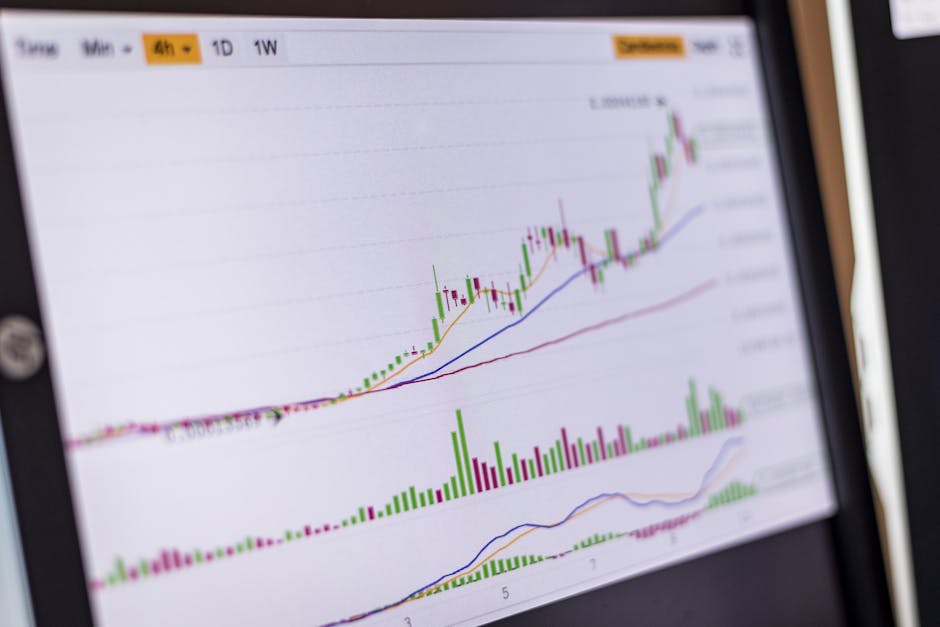
For most of its early life, Bitcoin barely blinked at what the Federal Reserve did. It traded in its own world, driven by adoption headlines, exchange drama, and its own boom-bust rhythm. That has changed. These days, when the Fed announces a rate decision, Bitcoin often jumps or drops within seconds, right alongside stocks. If you want to understand how Bitcoin reacts to Fed rate decisions, the short version is this: it now behaves like a risk asset, and risk assets live and die on liquidity.
That does not mean the Fed "controls" Bitcoin. It means the Fed sets the temperature of the room, and Bitcoin is one of the more excitable guests.
The one idea that explains most of it: liquidity
Strip away the jargon and a rate decision is really a decision about how expensive money is and how much of it is sloshing around.
When the Fed raises rates or drains its balance sheet, money gets more expensive and scarcer. Safe assets like short-term government debt start paying a real yield, so there is less reason to reach for something volatile that pays nothing. Capital rotates toward safety. The assets at the risky end of the spectrum feel the squeeze first, and Bitcoin sits about as far out on that spectrum as anything liquid.
When the Fed cuts rates or adds liquidity, the reverse happens. Cash earns less just sitting there, borrowing is cheaper, and investors go looking for return further out on the risk curve. That environment tends to be friendlier to Bitcoin.
So the mental model is simple:
- Tighter policy: liquidity drains, headwind for risk, pressure on Bitcoin
- Easier policy: liquidity returns, tailwind for risk, support for Bitcoin
Simple, but not automatic. Markets are forward-looking, which is where most people trip.
Why the obvious trade so often fails
Here is the trap. The Fed cuts rates, you expect Bitcoin to rip, and instead it drops. What happened?
Markets do not trade the news. They trade the surprise. By the time a decision is announced, traders have spent weeks pricing in what they think will happen. If a cut is fully expected, the cut itself is already baked into the price. The move comes from the gap between what people expected and what they actually got, plus the tone of what the Fed says next.
That is why the guidance often matters more than the number. The decision is one line. The press conference and the projections are where the Fed hints at the path ahead, and a hawkish tone attached to a dovish action can flip the reaction on its head. "We cut, but we are in no hurry to do more" reads very differently than "we cut, and more is coming."
This is also why you cannot forecast the reaction from the headline alone. You can understand the mechanics all day and still be wrong about direction, because direction depends on expectations you cannot fully see.
What actually moves on a Fed day
A rate decision is not a single event. It is a sequence, and each part can push price a different way.
| What gets released | What it tells you |
|---|
| The rate decision | The headline number, usually mostly priced in |
| The statement | Wording changes that hint at the next moves |
| The projections | Where officials see rates heading over time |
| The press conference | Tone and nuance, often the biggest mover |
The uncomfortable truth is that the loudest move frequently comes from the press conference, not the decision. Bitcoin can spike on the announcement, reverse hard when the tone shifts, then reverse again as traders reread the details. The first candle is rarely the honest one.
If you want a broader routine for handling scheduled releases like this, how to build an economic calendar routine walks through setting up a repeatable process so you are never caught flat-footed.
Bitcoin as a risk asset, not a safe haven
A lot of confusion comes from an old story: that Bitcoin is digital gold, a hedge that rises when everything else falls. On Fed days, that story mostly does not hold. Bitcoin has been trading with a positive tilt toward risk assets, meaning it tends to move with stocks rather than against them when macro fear spikes.
That is worth sitting with, because it changes how you read a Fed reaction. If risk assets are getting hit on hawkish guidance, expecting Bitcoin to act as a safe port is fighting the current. For a fuller look at that distinction, see gold vs bitcoin safe haven and the closely related how bitcoin reacts to risk-on and risk-off, which unpacks the same behavior across the wider risk cycle.
None of this is permanent. Correlations drift, and Bitcoin has its own drivers, from ETF flows to its four-year supply rhythm, that can override macro for stretches. But on the specific afternoon of a rate decision, the risk-asset lens usually explains more than the digital-gold one.
How to watch it without guessing
Since you cannot reliably predict the reaction, the sensible move is to react to what price actually does, not to what you think it should do. A few habits help.
Wait for the dust to settle
The first few minutes after the release are the worst time to make a decision. Spreads widen, liquidity thins, and price whips both ways to trap the eager. Letting the initial spike burn itself out costs you nothing and saves you from the fakeouts. There is no prize for being first into a stampede.
Let a trend confirm before you act
A cleaner approach is to define, ahead of time, what a confirmed move looks like to you, then wait for it. That might be price holding above or below a level you marked earlier, or a trend read staying pointed the same way for more than one candle. The point is to have a rule so the noise does not make the decision for you. This is where a trend-following mindset earns its keep, and how to trade the bitcoin trend covers the mechanics of staying on the right side without predicting the turn.
Size for the volatility, not against it
Fed days move faster and wider than normal. If you do engage, smaller size and a defined stop keep a bad guess from becoming a bad week. Risking only a small, fixed slice of your account per trade, a common rule of thumb is around one percent, keeps any single event survivable. Risk management in trading goes deeper on why the size of your loss matters more than the accuracy of your read.
Brief but honest: leverage and event volatility are a bad marriage, and most accounts that blow up on a news spike do so because the position was too big, not because the read was wrong.
A calm framework beats a hot take
If you take one thing from all this, let it be that understanding the mechanism is not the same as predicting the outcome. You can know exactly why tighter policy pressures Bitcoin and still have no business guessing whether the next decision sends it up or down. The expectations are already in the price, and the tone of the guidance is the wildcard.
That is why a rules-based, trend-following approach fits Fed days so well. It does not ask you to be right about the Fed. It asks you to wait, read what price is doing, and act only when the move confirms. That is the entire philosophy behind how Vektor is built: it reads the trend on gold and Bitcoin, says long, short, or flat, and spends most of its time waiting rather than forcing trades into chaos. It plots the exit as a trailing stop that follows the trend, does not repaint, and can send a phone alert so you are not glued to the screen during a press conference. It is information, not financial advice, and it does not place trades for you.
Vektor
You do not have to guess the trend anymore.
Vektor reads gold and Bitcoin on your own TradingView chart and tells you long, short, or wait. $39/month, or $359/year ($29.92/month billed yearly). Cancel anytime.
The Fed will keep having meetings. Bitcoin will keep reacting to them like the risk asset it has become. Your edge is not in forecasting the reaction. It is in having a plan boring enough to survive it.
FAQ
Does Bitcoin go up or down when the Fed cuts rates?
There is no fixed rule. Easier policy tends to add liquidity, which can support risk assets like Bitcoin, but the move depends on whether the cut was already expected and what the Fed signals about the path ahead. A cut that markets had fully priced in can even sell off if the guidance sounds cautious. Watch the reaction rather than assuming a direction from the headline.
Why does Bitcoin care about the Fed at all?
Because a large share of Bitcoin demand now comes from investors who treat it as a high-volatility risk asset. When the Fed tightens, borrowing costs rise and speculative capital gets scarcer, which pressures assets at the risky end of the spectrum. When it eases, the opposite tends to happen. Bitcoin sits toward that risky end, so it feels the shift.
Should I trade Bitcoin during the FOMC announcement?
The minutes right after the release are usually the most chaotic, with wide spreads and fake moves in both directions. Many traders sit out the first reaction and wait for price to settle into a clear trend before acting. Trading the spike itself is a coin flip dressed up as analysis.